
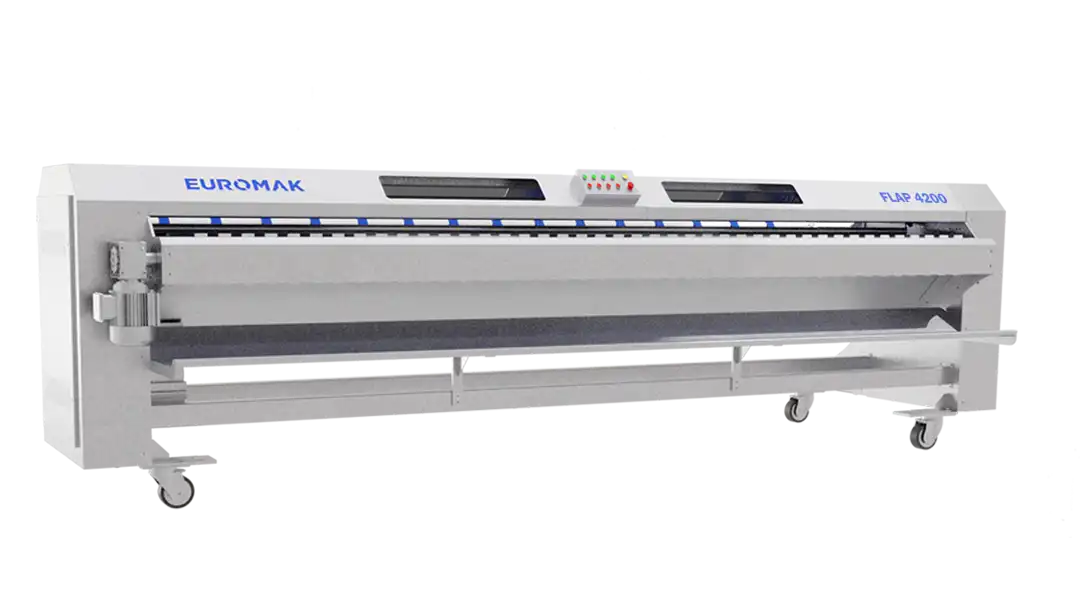
Ask any experienced rug cleaner what the most important step in the washing process is, and the answer is almost always the same: dusting.
Not washing. Not rinsing. Dusting.
Before a rug ever touches water, it is carrying pounds of dry soil, sand, allergens, and debris embedded deep in the pile and foundation. If you wash without dusting first, you are not cleaning that material out. You are turning it into mud, pushing it deeper into the fibers, and making your washing machine work twice as hard for half the result.
A professional rug dusting machine solves this. It mechanically beats and vacuums dry soil out of the rug before washing begins, protecting your downstream equipment, improving wash quality, and dramatically reducing the time and chemistry needed to get a rug truly clean.
This guide covers everything you need to know: how rug dusting machines work, the difference between the Flap and Flap BW lines, how to choose the right size for your facility, and full specs and pricing for every model we carry.
Why Rug Dusting Is the Most Critical Step in Professional Cleaning
A typical residential rug can hold up to one pound of dry soil per square foot before it looks visibly dirty. That soil is not sitting on the surface. It is packed into the pile, ground into the foundation, and trapped between fibers where a vacuum cannot reach it.
When you wash a rug without dusting first, here is what happens:
- Dry soil turns to mud and gets pushed deeper into the rug foundation.
- Your rug washing machine has to work significantly harder, using more water and chemistry to achieve the same result.
- Wash water becomes heavily contaminated faster, reducing cleaning effectiveness.
- Drying time increases because wet soil holds moisture longer than clean fibers.
- The finished rug may still carry embedded soil that reappears as the rug dries, leading to customer complaints.
Proper dusting before washing eliminates all of these problems. It is not an optional step. It is the foundation that every other part of your process depends on.
How a Rug Dusting Machine Works
A professional rug dusting machine uses a combination of mechanical beating and industrial vacuum suction to extract dry soil from deep within the rug pile and foundation.
The rug is fed through the machine on a conveyor belt. As it passes through, dual beating rollers strike the rug at 208 beats per minute, loosening embedded soil and driving it toward the surface. Sweeping roller brushes agitate the pile further, and a powerful industrial vacuum running at 2,000 m³/h pulls the dislodged soil away before it can resettle.
The result is a rug that has lost the bulk of its dry soil load before it ever reaches your wash system. Your cleaning solutions work more effectively, your wash water stays cleaner longer, and your finished rugs come out genuinely clean rather than just surface-clean.
Flap vs. Flap BW: Understanding the Two Lines
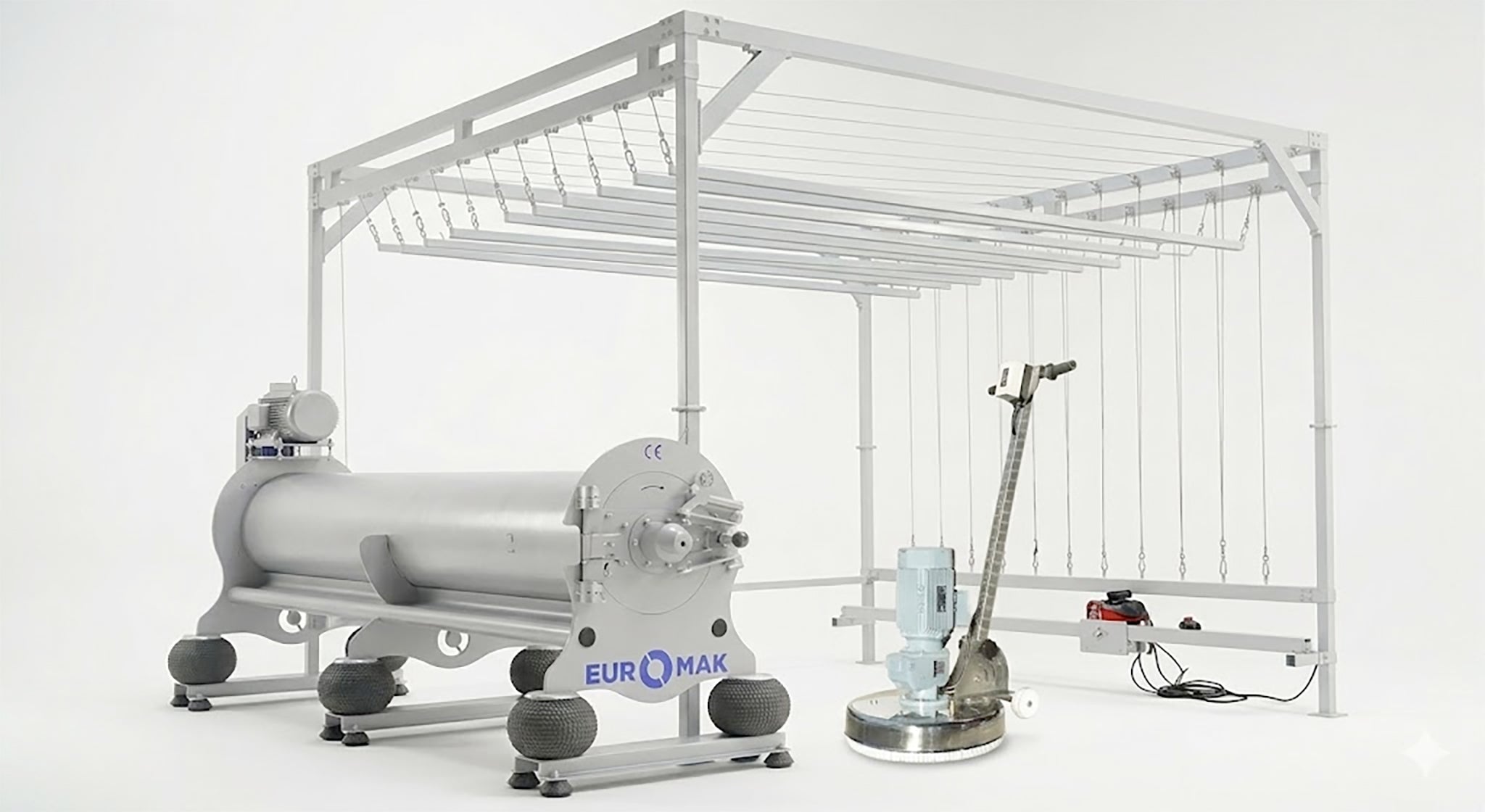
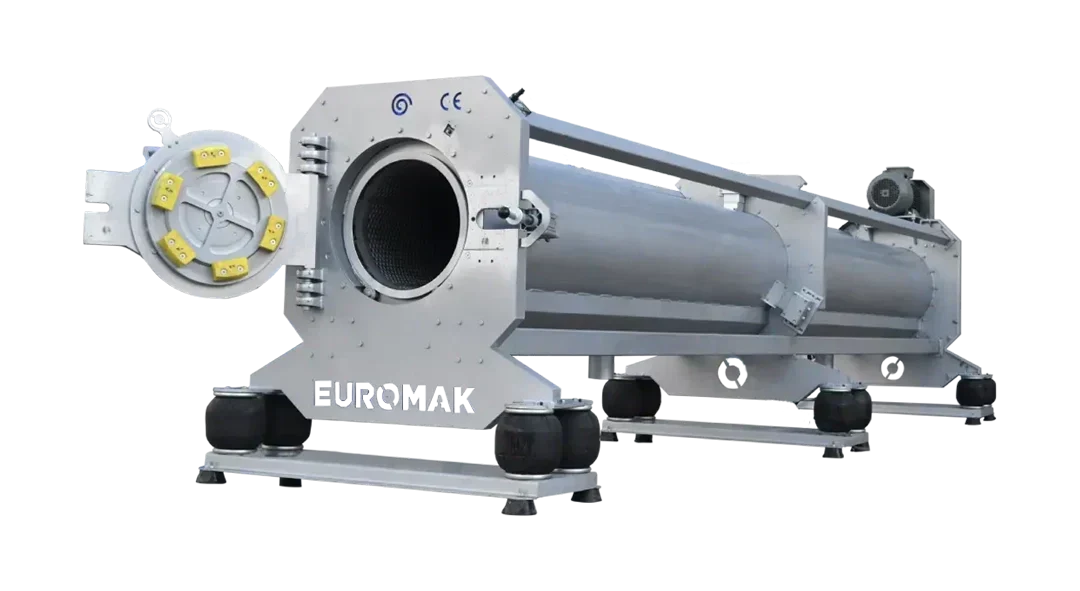
EuromakUSA offers two rug dusting lines: the Flap series and the Flap BW series. Both use the same core beating and vacuum technology, but they are designed for different facility configurations.
The Flap BW line is wall-mounted, which frees up valuable floor space in your dusting zone. This is a significant advantage in tighter facilities where every square foot counts. The Flap line is freestanding, offering more flexibility in placement and the widest range of drum sizes, including the 17ft and 19ft models for large-format rug specialists.
How to Choose the Right Dusting Machine Size
Just like with a centrifuge spinner, drum width is the primary sizing decision. Your dusting machine needs to handle the widest rugs in your job mix without forcing awkward folds that reduce dusting effectiveness.
Key Factors to Consider
- Rug width: Match your drum size to the widest rugs you regularly clean. A rug folded to fit a smaller drum will not dust evenly, leaving embedded soil in the fold areas.
- Daily volume: Higher volume operations benefit from wider drums that process rugs faster with less repositioning.
- Facility layout: If floor space is tight, the Flap BW wall-mounted line frees up your dusting zone significantly.
- Rug types: Heavily soiled rugs, high-pile rugs, and rugs from high-traffic commercial environments benefit from the most aggressive dusting you can provide. Size up if your job mix skews toward these.
How to Choose: A Simple Decision Framework
Work through these three questions and you will have a clear answer.
Step 1: What Is the Widest Rug You Regularly Clean?
That is your minimum drum size. Do not fold rugs to fit a smaller machine. Folded rugs do not dust evenly, and the fold areas will carry embedded soil into your wash cycle. Size to your widest rug and add a buffer if you are on the fence.
Step 2: Freestanding or Wall-Mounted?
If your facility has open floor space and you want the widest range of size options including 17ft and 19ft models, the Flap series is the right choice. If floor space is at a premium and you want to keep your dusting zone compact, the Flap BW wall-mounted series gives you the same performance without the footprint.
Step 3: What Is Your Daily Volume?
Higher volume operations benefit from wider drums and more powerful motors. If you are processing 20 or more rugs per day, size up. The time saved on each cycle compounds quickly across a full day of operation.
Where Dusting Fits in Your Full Workflow
Dusting is always the first step. Here is how it connects to the rest of your rug cleaning process:
- After dusting, rugs move to your automatic rug washing machine for deep cleaning. A properly dusted rug washes faster, uses less chemistry, and produces better results.
- After washing, your centrifuge spinner extracts 90 to 97% of water before the rug moves to the drying zone.
- Drying racks and dehumidifiers bring the rug to a safe moisture level quickly.
- A finishing machine grooms fibers and gives the rug a polished appearance before it goes back to the customer.
Every step in this chain performs better when dusting is done right. A clean, dry-soil-free rug washes faster, dries faster, and finishes better. That means more rugs per day, lower operating costs, and happier customers.
Installation and Electrical Requirements
All EuromakUSA dusting machines are CE certified and built for continuous commercial use. Before purchasing, confirm the following for your facility:
- Electrical supply: All models require 3-Phase / 380V / 50-60Hz power. Confirm your facility has the correct electrical infrastructure before installation.
- Floor space: Freestanding Flap models require adequate clearance on all sides for rug loading and unloading. Wall-mounted Flap BW models require a structurally sound wall capable of supporting the machine weight.
- Dust containment: Position your dusting machine in a zone with adequate ventilation or dust containment. The industrial vacuum handles the bulk of dust, but the dusting zone should be separated from your washing and drying areas.
- Financing: All models are available with financing from 24 to 60 months, making it straightforward to acquire the right machine without a large upfront investment.
Ready to Find Your Dusting Machine?
A professional rug dusting machine is not just a piece of equipment. It is the foundation of a high-quality rug cleaning operation. Get this step right and every other part of your process gets easier, faster, and more profitable.
Browse both lines and find the model that fits your facility:
- Flap Series - Freestanding, 8ft to 19ft, starting at $22,985. The complete range for operations of every size.
- Flap BW Series - Wall-mounted, 8ft to 14ft, starting at $23,860. Maximum performance with minimal floor footprint.
Not sure which model is right for your facility? Contact our team with your rug widths, daily volume, and facility layout. We will recommend the exact machine for your operation and walk you through your financing options.









Share:
How Restoration Companies Can Add Rug Cleaning In-House
Rug Cleaning Equipment for Startups